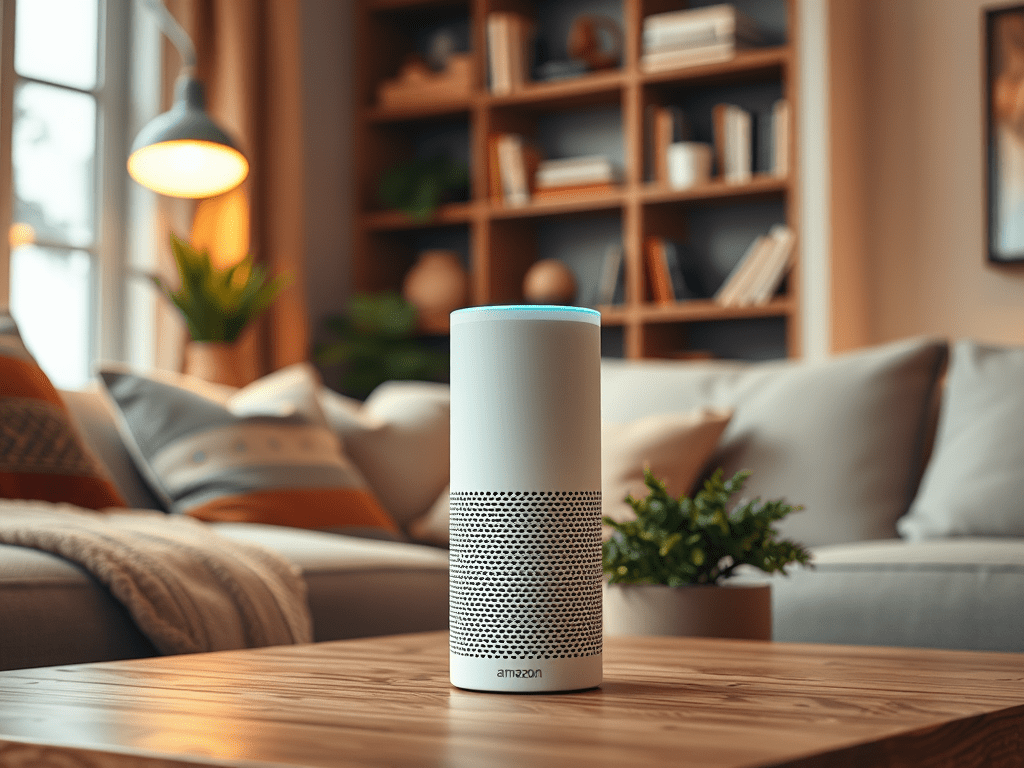

We all should try to be “smart”.
But do our appliances have to be?
When I first started thinking about having a smart home, I thought that I would need (or really, want) to buy everything “smart”. I started searching Amazon for “smart home gadgets” and looked for every Alexa-compatible device that I could find.
After about a half an hour of stopping myself from spending a lot of money impule shopping, I realized something that has become extremely important to my house (and my wallet) ever since:
Sometimes it’s better for an appliance to just stay “dumb”.
Here are 3 questions I now ask myself when I’m considering the purchase of any “smart” device:
- How do I interact with ______________? One of the first gadget-y “smart” appliances that I was tempted to buy was this Hamilton Beach 12-cup coffee maker that has an app, can be voice controlled, etc. etc.
It’s $100.
Think about the basic process of making your coffee:
- You fill the water reservoir.
- You add your ground coffee.
- You start the coffee maker
At which point the machine takes over and does the rest.
Think about how much work you have to do before the coffee maker takes over the process of making your coffee. And that doesn’t even include steps like grinding your own beans, slow pouring the hot water, etc. if you’re picky enough about your coffee to want to do that.
So, if all you’re doing is automating that final step — how much of an impact does that have when it comes to making this process easier?
You’re already standing in front of your coffee maker.
You’ve already done 2/3rds of the work yourself.
Is paying that extra money for a coffee maker worth taking that last step off of your “to-do” list?
For me, it wasn’t.
Which leads me to #2…
- What will happen to _________________ if it sits? Ever look at a slow cooker or pressure cooker that had a “delayed start” feature and think, “Oh great, that will keep me from having to be there to start my Instant Pot while I’m at work…”
Here’s the problem with that: Say you wanted to pressure cook a package of chicken breasts and have it ready to go when you got home from work at 5:30 or 6pm. You put boneless, skinless (and raw) chicken breasts in your pressure cooker at 8am when you leave your house. Your chicken then sits — at room temperature — for 7 hours before the pre-programmed delayed start kicks in and you cook your chicken.
I don’t care how hot it gets inside of a pressure cooker.
I wouldn’t trust that chicken. - Is it worth paying extra for this device to be “smart”? This goes back to that coffee maker from question #1. A regular “dumb” coffee maker can run you as little as $20, maybe even less if you find a good sale. So does it make sense to pay five times the cost of a cheap, “dumb” coffee maker to have the ability to control it using my voice? I don’t think so.
So — when does it make sense to buy the smart version of a device or appliance?
- If a smart device can do the job — start to finish — without your intervention. I have rarely found anyone who has regretted buying a quality robot vacuum. (Don’t buy a cheap one — it’s like asking a blind person to run around your house with a vacuum and hope that they will be able to get the job done without breaking everything in your house.) If your robot vacuum can map your house, then systematically vacuum (or even mop) your floors on whatever schedule works for you and your family, then not only are you saving yourself one of the most mundane of weekly chores, you might be saving yourself two (or even three) of these chores, since many robot vacuum owners report that they have to dust less often.
- If the smart device replaces multiple jobs — especially dangerous jobs — over the long run. My husband tried to put up Christmas lights by himself once. We live in Florida. It was hot, frustrating, exhausting and potentially dangerous. Shortly after that Christmas we started saving up to have an electrician install smart lighting on the outside of our house. Not only does smart lighting improve the safety of your house and your ability to be more comfortable outside at night, but you never have to put up holiday lights again. Ever. The lights on a string of outdoor smart lights can change color bulb by bulb, which means that you can change colors for each holiday, the preferences of your family members, when your favorite team wins a game…or for any other reason that you can think of. This was 100% worth the time and money — even paying a professional for the installation — and I would do it again in a heartbeat.
- If the smart device does a job — or reminds you to do a job — that would otherwise remain forgotten. When we bought our current home, three of the smart appliances that we bought for this house were a smart washer, dryer and dishwasher. Do these devices clean my clothes and dishes any better than a “dumb” version would? If I’m being honest, not really. So why do I still think it’s worth it to buy the “smarter” version of these appliances?
The notifications.
Yes, I know that your appliances will make sounds that tell you when the washing and drying cycles are done — but they only do that once. And they don’t (usually) notify you about the maintenance that you need to do to keep everything running smoothly, like self cleaning cycles or changing filters. Having those notifications pop up periodically reminds me to do the maintenance tasks that might otherwise get “lost in the shuffle” until they can no longer be ignored. And as all homeowners know, ignoring maintenance tasks usually leads to a hefty repair bill (or worse, the need to replace the appliance at the worst possible financial time).
We should all be smart.
But not all of our appliances have to be.
Smart appliances — of any type — should never be an impulse purchase. When you are looking to add something to your home to “make it smarter”, think carefully about where you’re going to use that item, how you are going to use that item, and whether the “smartness” of any items is going to be worth the premium that you will pay for it.
So have you made any smart home purchases that you regret? Or have you seen any other devices where their “smartness” made them a really dumb buy? Let’s talk about it in the comments below!

 Virtual Homemaker
Leave a comment